The Open-Door Myth: Why an Invitation Needs a Next Step
An open-door invitation can leave athletes unsure how to connect. Make the next step clear, useful, and easy to take without asking anyone to prove they belong.
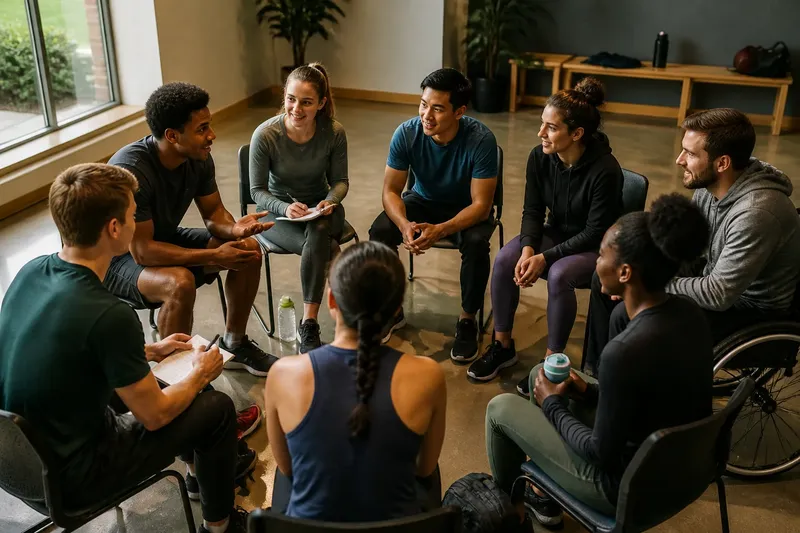
The most common mistake with an open-door invitation is treating attendance as the whole point. In an athlete network, an invitation should also help people start a useful exchange: sharing a training insight, asking for a perspective from another sport, or offering knowledge they have gained through experience. Without that purpose, a gathering can fill the room but leave people disconnected.
A strong invitation for an athlete network names the kind of exchange the group wants to make possible and gives members a simple way to contribute. That focus matters more than polished welcome language. It helps organizers build relationships across sports and experience levels without turning every gathering into a general meet-and-greet.
What should an athlete network invite people to exchange?
Choose a clear subject for the conversation. It might be how athletes balance training with other responsibilities, how they approach returning to a familiar activity after trying a new one, or what they have learned from working with teammates at different stages. Keep the subject broad enough for varied experience, but specific enough that people can prepare a thought or question.
Make the invitation clear about who can contribute. A useful peer exchange does not require everyone to be an expert. One athlete might bring a well-developed practice; another might bring a question that helps the group notice an assumption. Say that both kinds of contributions are welcome, and explain whether the gathering is for discussion, shared activity, or both.
For example, an invitation could say: “Athletes from any sport are welcome to share one practice that helps them stay consistent and one question they are still working through. We’ll compare approaches in a small-group discussion.” This tells people what the network is for, rather than simply promising a friendly atmosphere.
How can organizers make peer exchange useful?
Give the discussion a shape so a few confident voices do not take over. A host can open with a prompt, invite people to speak in pairs before sharing with the whole group, and leave time for participants to ask follow-up questions. Make it acceptable to pass, especially when a topic touches on personal circumstances or an unresolved challenge.
Use prompts that invite transferable knowledge without demanding private details. Ask what someone has adapted from another sport, how they decide when to ask a teammate for input, or what makes feedback easier to use. Avoid asking people to rank sports or declare one approach best; those questions can shut down the very exchange the network is meant to support.
At the end, offer a choice of next actions: continue the discussion in a shared channel, exchange contact details, or leave with a question to consider. Do not assume everyone wants ongoing contact. A network builds trust when participation does not automatically become an obligation.
What should members agree about sharing?
Before inviting personal stories, tell participants how the group will handle them. Agree that people should ask before repeating someone else’s experience outside the gathering. Also clarify whether members may share general ideas afterward without identifying who said them.
Keep the boundary practical. The host can remind everyone that a peer conversation is not a substitute for qualified coaching, medical care, or other professional advice. If a discussion turns toward an individual’s health or safety, encourage them to speak with an appropriate professional rather than inviting the group to diagnose or prescribe.
It is not worth the effort to build a complicated code of conduct for a small, focused conversation before agreeing on its basic purpose and privacy expectations. A short explanation of what may be shared, what stays private, and how to raise a concern is a more useful starting point.
What questions help an athlete network work well?
How do we keep one sport from dominating the conversation?
Use prompts that ask for the reasoning behind a practice rather than sport-specific jargon. Invite people to translate unfamiliar terms and ask others what parts of an approach might transfer to their own setting.
What if members have very different levels of experience?
Make room for both practical knowledge and open questions. A host can ask experienced members to explain the context behind their advice, while reminding everyone that an idea is an option to consider, not a rule for another athlete.
Should an athlete network meet in person or online?
Choose the format that supports the exchange and is workable for the members involved. In person, a community room or club space may make small-group conversation easier; online, a moderated video call or focused discussion channel can help people join from different locations.
How can a host tell whether the exchange had a clear purpose?
Ask participants what idea they are taking away and what question remains open. If people can name a useful insight or a connection they want to continue, the format gave the conversation somewhere to go.
How can you turn a gathering into an ongoing network?
Imagine a host planning a cross-sport discussion at a community center. The starting inputs are athletes who practice different sports, a shared interest in recovering well after demanding sessions, and one hour for conversation. The host sends an invitation asking each person to bring one habit they find useful and one question; at the gathering, pairs compare habits, then share ideas without naming anyone else’s personal details. Before people leave, the host offers an optional group message thread for sharing general resources. The result is a concrete exchange and a voluntary way to continue it, without requiring anyone to join a club or disclose more than they choose.
For an invitation for an athlete network, make the next step a contribution rather than a test of commitment. Ask people to bring a question, a practice, or a perspective from their sport, then give them a clear way to decide whether they want further contact. That small distinction helps a gathering become a network built on shared knowledge and choice.