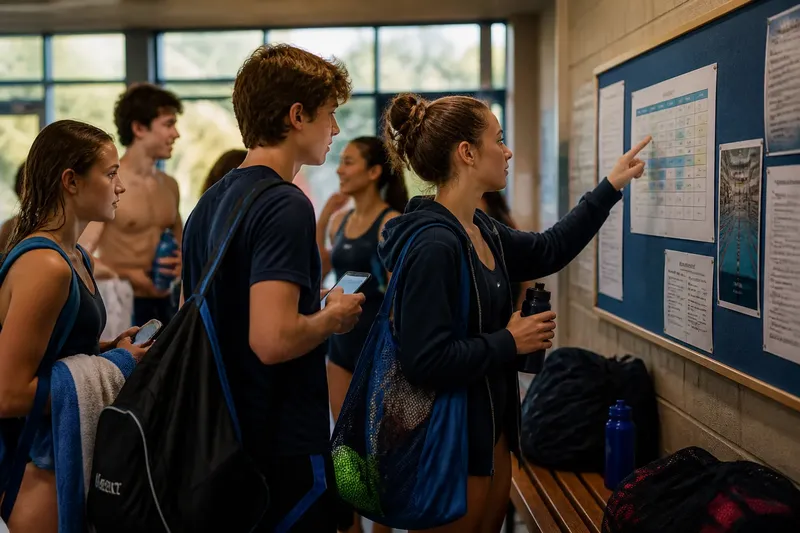
A First Visit to a New Sporting Group
Use a first visit to a new sporting group to understand its training culture, shared knowledge, and fit with your goals before deciding to return.
The most common mistake on a first visit to a new sporting group is treating the session like an audition. You focus on keeping up and being liked, then leave with little sense of how the group actually trains or shares knowledge. Use the visit to observe its working culture, not to prove your worth.
A group can connect athletes through more than friendly greetings. Watch how members pass along useful knowledge, adjust practice for different experience levels, and respond to mistakes. Those habits tell you whether the network could support your development over time.
What does the group teach through its routines?
Notice how knowledge moves from one athlete to another. A coach may explain a drill, but experienced members often provide the small details that make it easier to follow: where to line up, how partners rotate, or what a cue means in practice.
Look for explanations that help people understand the activity rather than simply comply. If a member corrects a technique, do they say what to change and why? If someone is new to a drill, does a partner demonstrate it or offer a useful cue? These moments reveal whether expertise is shared or kept within a small circle.
Pay attention to who gets to contribute, too. Athletes at different stages may have relevant knowledge, including experience adapting a drill or recovering confidence after a break. A healthy exchange leaves room for questions and suggestions without treating every contribution as equally authoritative; safety and technical direction still belong with the appropriate coach or qualified professional.
How do members respond when someone struggles?
Every group has uneven sessions. The telling moment is often not a polished performance but what happens after a missed pass, a confusing instruction, or a newcomer’s mistake. Does someone offer a clear correction, make space for a reset, or turn the error into a joke at the athlete’s expense?
Separate direct coaching from disrespect. Useful feedback identifies an action and gives the athlete a way to respond. Repeated ridicule, exclusion from practice, or pressure to continue through pain are different signals. For injury concerns or questions about returning safely, get guidance from a qualified professional rather than relying on informal advice.
One awkward exchange may reflect a rushed practice. Look across the session for a pattern: whether people can ask for clarification, whether feedback is specific, and whether newer or less experienced athletes get meaningful chances to participate.
What should you observe before judging the fit?
Keep your attention on concrete features of the group’s shared practice. You do not need to interpret every conversation or decide whether each member could become a friend.
- Instruction: If directions are clear and athletes can ask what a cue means, note that learning is accessible; if instructions stay obscure, ask the coach to clarify before deciding whether the format suits you.
- Peer feedback: If members give specific, respectful corrections, note how feedback works; if comments are vague or belittling, consider whether you want to train in that environment.
- Participation: If athletes with different experience levels get useful turns, note that practice makes room for development; if some are routinely sidelined, ask how the group handles varied skill levels.
- Shared responsibility: If members help set up, explain routines, or include others in partner work, note that knowledge is distributed; if all support depends on one person, ask who handles questions when that person is absent.
- Response to mistakes: If an error leads to a calm cue or another attempt, note that learning is part of practice; if it brings ridicule or exclusion, decide whether the culture meets your standards.
- Safety boundaries: If athletes can pause and seek appropriate guidance, note that limits are respected; if anyone is pressured to ignore pain or a safety concern, stop participating and raise it with the responsible organizer or a qualified professional.
Which questions help you understand the group’s culture?
Ask questions that reveal how athletes learn and support one another, rather than trying to cover every administrative detail. A brief conversation with a coach or member after practice can be enough.
- How do athletes usually give each other feedback during practice?
- Are there chances for members to share skills or lead part of a session?
- How do you adapt drills for people with different experience levels?
- What does the group do when someone is returning after time away?
- Who can answer a training question between sessions?
Listen for a clear description, not a perfect slogan. A group may not have a formal mentoring system, yet members can still exchange knowledge generously. Conversely, a stated commitment to teamwork means little if people are routinely shut out of practice or mocked for asking questions.
How can you tell whether the culture fits?
Compare what you observed with what you want from sport. You might value technically detailed coaching, peer encouragement, shared leadership, or a low-pressure setting for rebuilding a routine. No single culture suits every athlete, and a group need not meet every preference to be a good fit.
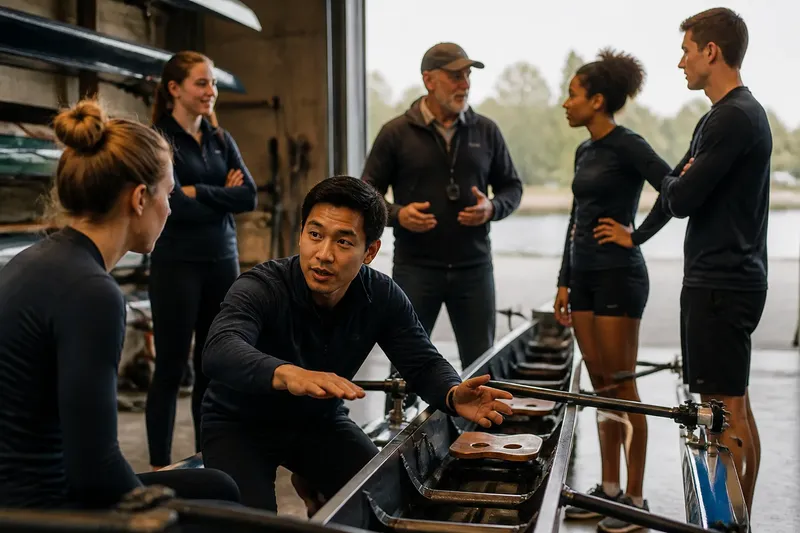
Say you visit a fictional community rowing group where the coach explains the warm-up but leaves boat setup unfamiliar to you. During practice, a member calmly shows you how the crew organizes equipment and explains the rotation. You ask the coach whether beginners can keep learning setup skills at later sessions; the coach says that members take turns demonstrating them. From those specific observations, you can decide that the group offers a useful learning path, while still weighing its schedule and training style against your own needs.
Do not spend the session trying to decode every social cue or win approval. That effort is not worth it. Focus on whether knowledge is accessible, feedback is respectful, and athletes can take part without hiding reasonable questions.
What do athletes often ask about a first visit?
Do I need to be experienced to learn from a group?
No single answer applies to every sport or club. Ask how the group supports different experience levels, then judge whether the session’s actual instruction and peer exchanges match your needs.
Can I learn from other athletes as well as the coach?
Often, members share practical knowledge about routines, equipment, and adapting drills. Treat peer advice as one source of information, and take technical, health, or safety concerns to the coach or an appropriately qualified professional.
What if I prefer a different training style?
Ask how the group balances coaching, independent practice, and member feedback. If its approach conflicts with what helps you learn, you can look for a group whose methods fit better.
Should I return if the first session felt awkward?
Consider what caused the discomfort: unfamiliar routines can feel awkward, while repeated disrespect or pressure may point to a deeper mismatch. If one session was unusually disorganized, another visit may clarify whether that was typical.
What is the best next move after observing a session?
Write down a few specific observations while they are fresh: one thing that helped athletes learn, one sign of how feedback worked, and one concern or unanswered question. This keeps your decision grounded in what happened rather than in a vague sense of whether you seemed to fit.
If the group’s learning culture appeals to you, ask how to join another session or take part in its next shared activity. If the answer leaves a key concern unresolved, ask one focused follow-up. A first visit to a new sporting group is useful when it shows you how athletes exchange knowledge and whether that exchange is one you want to join.